
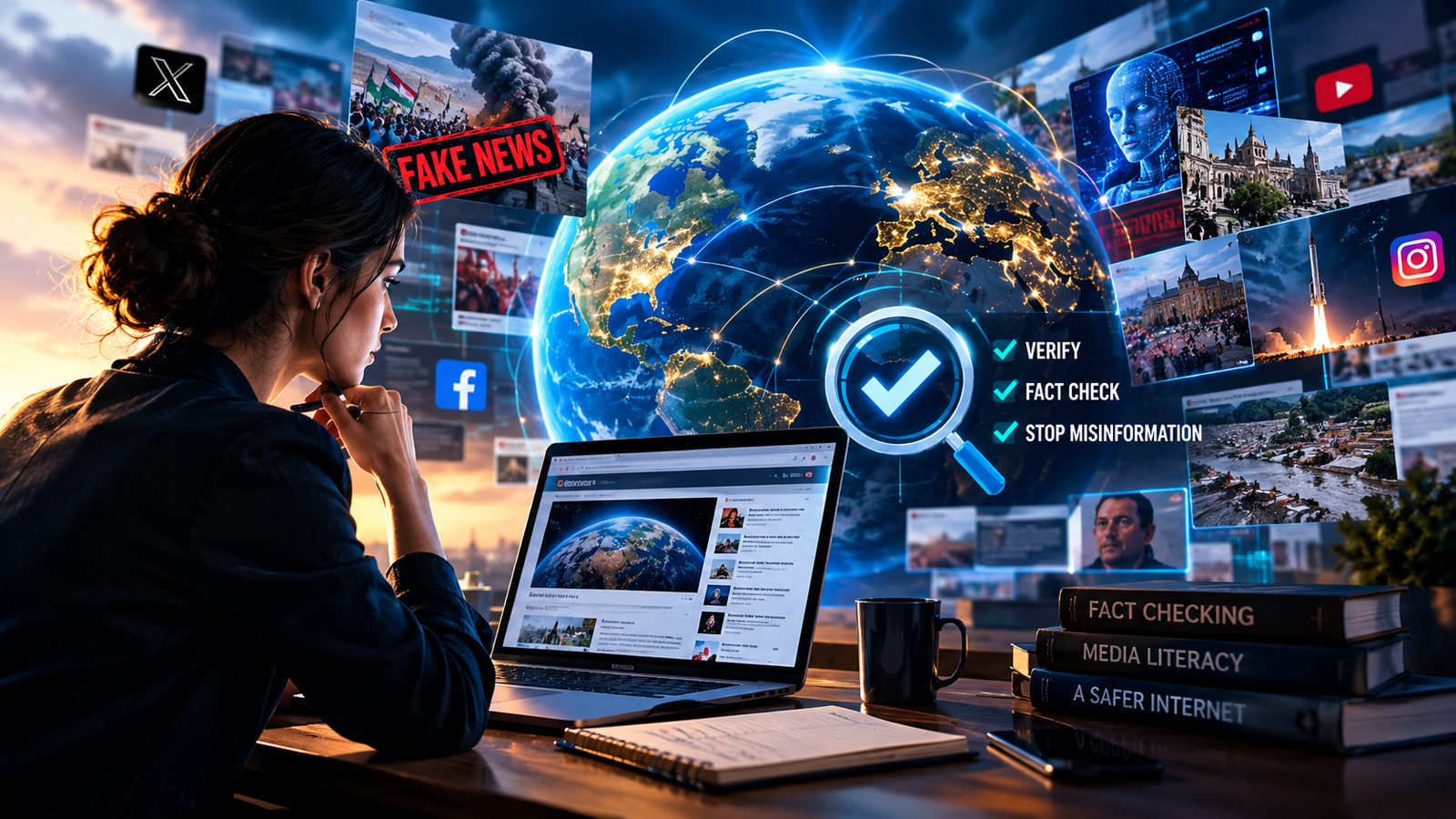
Introduction
A single post on social media can reach millions of people before anyone checks whether it is true. A dramatic video, a surprising political statement or a photograph claiming to reveal a major international event can quickly become a worldwide talking point.
In 2026, online rumours remain an important topic for readers who want to understand what is happening around the world. Some stories begin with genuine news but become exaggerated as people share them. Others use old photographs, misleading captions, edited videos or AI-generated content to make false claims look convincing.
That is why understanding international rumours in 2026 is about more than following viral trends. It is also about learning how to separate confirmed information from speculation.
In this guide, we explore how international rumours spread, examples of misleading viral claims, reliable fact-checking resources and practical ways to verify a story before sharing it.
What Are International Rumours?
International rumours are unconfirmed stories or claims that circulate across countries, languages and online communities. They can concern politics, celebrities, science, technology, public safety, international relations or major world events.
A rumour is not automatically false. Some unconfirmed reports eventually turn out to be accurate. However, a claim should not be treated as a fact until reliable evidence supports it.
For example, an online post might claim that a government has announced a major policy change. Before accepting the claim, readers should look for an official announcement or credible reporting from established news organisations.
The distinction is simple: a story becoming popular does not make it true.
Why Are International Rumours Spreading So Quickly in 2026?
Several factors make it easier for misleading stories to travel across the internet.
1. Social media spreads information rapidly
Platforms allow users to share breaking news with people around the world within seconds. This speed can be useful during major events, but it also allows inaccurate information to spread before journalists and fact-checkers can investigate it.
A dramatic headline may attract attention even when the article behind it provides little evidence.
2. AI-generated images and videos look convincing
Artificial intelligence makes it easier to create realistic-looking photographs, voices and videos. These tools have legitimate creative uses, but fabricated content can also be presented as genuine evidence of an event.
For more information, read our guide to AI image detectors and how to check whether a picture is AI-generated.
3. Old footage is presented as new
An authentic video can still be misleading when it is shared with the wrong date or location.
For instance, footage from an earlier protest, natural disaster or political gathering may be reposted during a new event. Viewers who do not check its origin may believe it shows something happening right now.
4. Emotional headlines encourage sharing
Stories involving danger, conflict, celebrities or shocking discoveries can generate strong reactions. People may share them immediately because they feel surprising or important.
Taking a moment to check the source can help prevent misinformation from spreading further.
Examples of Viral International Claims in 2026
The following examples illustrate how misinformation can circulate. They are not a complete list of international rumours, and each claim needs to be assessed individually.
Viral claims about a supposed gravity blackout
In August 2026, social media posts circulated a claim that Earth would experience a seven-second gravity blackout on August 12. The claim was not supported by credible scientific evidence.
The date did coincide with genuine astronomical events, including a total solar eclipse and the Perseid meteor shower’s peak period. However, those real events did not make the gravity-blackout claim true.
This example shows how misinformation can combine a real event with an invented prediction to make a story appear believable.
A misleading video involving India’s foreign minister
In September 2026, a video circulated online that falsely portrayed Indian External Affairs Minister S. Jaishankar making remarks about international relations. A fact-check published by India Today found that the video was a deepfake and that the remarks were not made during his September 28 appearance at the Asia Society.
The case highlights the importance of checking original speeches and full-length recordings instead of relying on short viral clips.
AI-generated disaster imagery
AI-generated images and videos can also be shared with captions claiming to show real disasters. Fact-checking organisations have documented misleading content involving floods and other events in 2026.
A photograph that looks realistic is not necessarily genuine evidence. Its source, publication history, location and supporting reports all matter.
Important: These examples demonstrate specific misinformation claims. They should not be confused with verified breaking-news developments.
How to Check Whether an International Rumour Is True
Before sharing a surprising international story, follow these practical steps.
Step 1: Find the original source
Look for the first available publication of the claim. Is it from an official organisation, a recognised news outlet or an anonymous social media account?
If the post does not identify a source, treat it cautiously.
Step 2: Search for independent confirmation
Check whether multiple credible news organisations have reported the same event independently. Several accounts repeating the same unverified post do not necessarily count as independent confirmation.
For scientific claims, look for statements from relevant scientific institutions or experts.
Step 3: Check the date and location
A real image or video may be several years old. Search for the original publication and compare landmarks, weather, signs and other visible details when appropriate.
Do not assume that a clip is recent simply because its caption says it is.
Step 4: Use reverse image search
Tools such as Google Lens can help identify earlier appearances of a photograph. This may reveal whether an image has been reused or circulated with a different description.
You can also consult our guide to free AI image detectors when investigating potentially AI-generated pictures.
Remember that AI detectors can make mistakes. Their results should be treated as clues, not definitive proof.
Step 5: Read beyond the headline
Headlines sometimes simplify complicated events or emphasise an unconfirmed possibility. Read the full report and look for evidence, named sources, dates and relevant context.
If an article says that something might happen, do not repeat it as something that has happened.
Step 6: Consult fact-checking organisations
Useful resources include:
- Full Fact: fullfact.org — investigates claims and viral misinformation.
- Rumor Scanner: rumorscanner.com — publishes fact-checks on viral claims, including international stories.
- Reuters Institute: Journalism, Media and Technology Trends and Predictions 2026 — examines changes in journalism, social media, AI and misinformation.
These resources can provide useful evidence, but you should still check whether a particular report directly addresses the claim you are investigating.
The Role of AI in International Misinformation
AI has made the creation of digital content faster and more accessible. People can now generate realistic scenes, imitate voices and edit videos with tools that require relatively little technical experience.
This creates new challenges for readers and journalists. A convincing image may not be an authentic photograph, and a familiar person’s voice may have been artificially generated.
However, AI is not the only source of misinformation. Cropped footage, misleading captions, manipulated photographs and false statements have circulated online for years.
It is also important to understand that AI detection tools are imperfect. Some genuine photographs may be incorrectly flagged, while some AI-generated images may pass undetected.
The best approach is to combine technical tools with source verification, independent reporting and careful reasoning.
How International Rumours Affect Public Understanding
False or misleading claims can have consequences beyond social media engagement.
They may create unnecessary fear, damage reputations, confuse people during emergencies or encourage hostility between communities. In some cases, misinformation can influence financial decisions or make it harder for the public to understand important international developments.
The effects depend on the claim, its audience and how widely it spreads. Not every rumour causes serious harm, but unsupported claims about public safety, health or international conflict deserve particular care.
Readers can help by avoiding sensational claims, correcting mistakes responsibly and waiting for credible evidence when the facts are unclear.
Where to Follow Reliable International News in 2026
For a broader understanding of world events, use a combination of established reporting, primary sources and specialist fact-checking.
- Follow reputable international news organisations for reporting and context.
- Check government or institutional websites for official statements.
- Consult scientific organisations for claims about space, weather and natural phenomena.
- Use fact-checking websites when a viral claim appears suspicious.
- Compare reports from different sources rather than relying on a single social media post.
You can also explore more explainers on our website, including World Space Week 2026, solar storms and their effects and meteor showers in 2026.
These related topics are useful examples of why separating scientific facts from viral speculation matters.
Frequently Asked Questions
What are the biggest international rumours in 2026?
There is no single authoritative ranking of the biggest international rumours. Viral claims vary by country and platform. To identify a specific rumour, check recent reporting and fact-checks from reliable sources.
How can I check whether international news is real?
Find the original source, confirm the date and location, compare independent reports and consult credible fact-checking organisations. Avoid relying on a headline or a viral post alone.
Are all viral rumours fake?
No. Some rumours eventually prove accurate, while others are exaggerated or false. The important distinction is whether credible evidence supports the claim.
Can AI-generated videos be mistaken for real news?
Yes. AI-generated videos and manipulated footage can look convincing, particularly when viewed without context. Check the original source and look for confirmation from trustworthy news organisations.
Which websites can help fact-check viral rumours?
Full Fact and Rumor Scanner are useful starting points. For a particular claim, look for a fact-check that directly addresses the evidence and context.
Should I share a rumour if many people are discussing it?
It is better to verify it first. A large number of shares does not establish that a claim is accurate. If evidence is unavailable, avoid presenting the story as confirmed news.
Final Thoughts
International rumours can travel across borders in minutes, but checking a claim does not need to be complicated. Start with the source, verify the date, compare credible reports and look for evidence before reaching a conclusion.
As AI-generated content and viral media continue to evolve, careful reading and independent verification remain valuable skills. The next time a surprising international story appears in your feed, pause before sharing it.
Stay curious, check the facts and let evidence—not virality—guide your understanding of the world.