
Updated: October 12, 2026
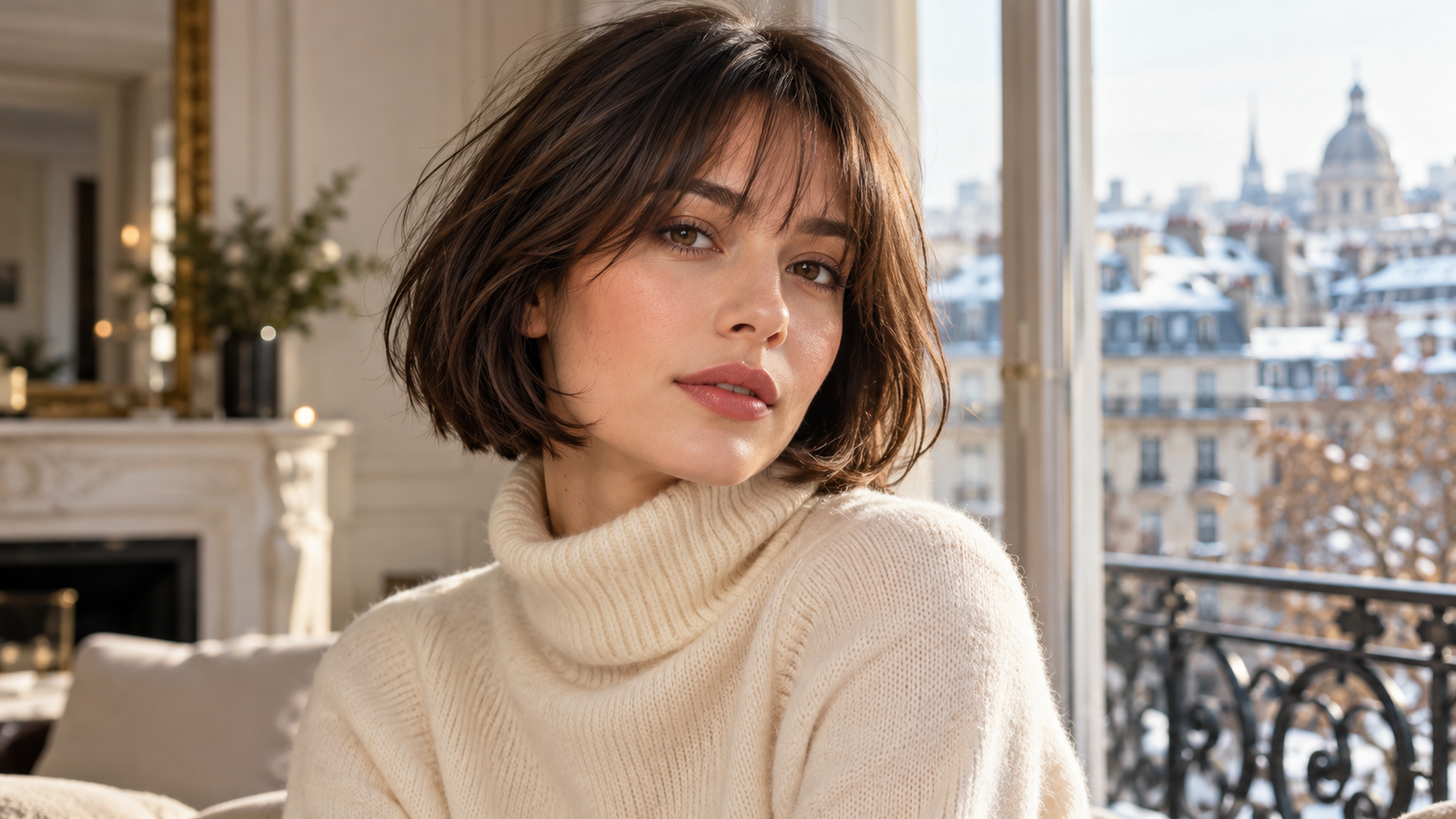
Some haircuts make a statement without looking like they are trying too hard. The French bob with wispy bangs is one of them.
Short, softly textured, and effortlessly stylish, this haircut combines the clean shape of a classic French bob with a light fringe that gently frames the forehead. The result is a look that can feel polished with a winter coat or relaxed with a chunky sweater.
For winter 2026, it is a particularly appealing choice for anyone considering a shorter hairstyle without committing to a severe, sharply structured cut.
The best part? You do not necessarily need perfectly straight hair or an elaborate styling routine to make it work. The right version depends on your natural texture, hair density, face shape, and how much daily styling you are comfortable doing.
Here is what to know before booking your next haircut.
What Is a French Bob With Wispy Bangs?
A French bob with wispy bangs is a short bob haircut, usually ending around the cheekbones, jawline, or chin, paired with a soft, lightly separated fringe.
Unlike a heavy, straight-across fringe, wispy bangs leave some of the forehead visible. The individual strands create movement rather than forming a solid curtain of hair.
A classic French bob often features a strong perimeter, while modern variations introduce subtle layering, softer ends, or natural waves.
The defining details include:
- Short length: Usually around the jaw or chin, although some versions are slightly longer.
- Light fringe: Airy bangs that do not completely cover the forehead.
- Natural movement: A shape that can work with straight, wavy, or carefully tailored curly hair.
- Soft texture: Enough movement to prevent the haircut from looking overly rigid.
- Personalized proportions: Length and fringe placement adjusted to the wearer’s features.
The overall effect is understated rather than excessively styled.
Quick answer: Is this a good winter haircut?
Yes, it can be an excellent winter haircut if you enjoy short hairstyles and are prepared for occasional fringe maintenance.
The bob works beautifully with high-neck sweaters, scarves, and structured coats. Wispy bangs add softness around the face, while the shorter length can make everyday styling feel simpler.
However, short hair is not automatically low-maintenance. Bangs may require morning adjustments, and very short bobs often need more frequent shaping than longer hair.
Why the French Bob and Wispy Bangs Make Sense for Winter 2026
The appeal of this combination is not based on one fleeting seasonal trend. It brings together two recognizable hairstyle elements that have continued to appear in contemporary beauty coverage: the French bob and softer, more adaptable bangs.
Allure’s 2026 haircut coverage highlighted a flipped variation of the French bob, while its separate bangs report discussed the return of lighter, wispy fringe styles.
These are signs of continued editorial interest, rather than proof that this exact combination is the most popular haircut of winter.
1. It complements winter fashion
Winter wardrobes often include oversized coats, turtlenecks, thick scarves, and textured knitwear.
A chin-length bob creates a clean outline above bulky clothing, making the hairstyle visible without requiring an elaborate updo.
The soft fringe also adds movement around the face, balancing structured outerwear.
2. It feels polished without needing perfect symmetry
The beauty of a textured French bob is that it does not have to look identical on both sides.
A gentle bend, slightly separated bangs, or a natural wave can add character.
That said, the haircut still needs a well-designed shape. A deliberately relaxed finish is different from an uneven cut.
3. It offers a softer alternative to blunt bangs
Full, heavy bangs create a strong visual line across the forehead.
Wispy bangs are lighter and can be easier to blend into the rest of the haircut as they grow.
They are particularly appealing to people who want a fringe without making it the dominant feature of their hairstyle.
4. It can be adapted to different textures
The French bob is not limited to one hair type.
Straight hair can create a sleek silhouette. Wavy hair naturally introduces movement. Curly hair can produce a beautiful rounded or sculpted shape when cut with shrinkage and curl patterns in mind.
The important distinction is that the same cutting technique will not deliver identical results on every texture.
Who Does a French Bob With Wispy Bangs Suit?
There is no universal face shape or hair type that automatically qualifies someone for a French bob.
A skilled stylist can modify the length, fringe density, parting, and layering to complement different features.
Rather than asking whether your face shape is allowed to wear the haircut, consider which version creates the proportions you prefer.
French bob for round faces
If you have a round face, you might prefer a bob that finishes just below the chin rather than at the widest point of the cheeks.
Slightly longer side sections and an open, separated fringe can create a more elongated visual effect.
A very rounded bob with heavy bangs may emphasize fullness, which is not necessarily undesirable. It depends on your preferred look.
French bob for oval faces
Oval faces can accommodate a wide range of bob lengths.
A cheekbone-length cut creates a stronger statement, while a chin-length version offers a little more styling flexibility.
Wispy bangs can sit above the eyebrows, graze them, or blend into longer face-framing pieces.
French bob for square faces
A softly textured perimeter can balance a defined jawline if that is the effect you want.
Loose bends, slightly irregular ends, and a lightweight fringe can make the haircut appear less geometric.
Alternatively, a blunt French bob can deliberately emphasize a strong jawline for a sharper editorial look.
French bob for heart-shaped faces
For a wider forehead and narrower chin, a fringe can create visual balance.
Longer wispy bangs that blend into the temples may look especially harmonious.
A bob ending near the chin can also add apparent fullness around the lower face.
French bob for long faces
An eyebrow-grazing fringe can visually reduce the amount of exposed forehead.
A bob with volume at the sides may create a wider silhouette, while a very flat, narrow style may accentuate facial length.
These are styling choices, not fixed rules.
Does a French Bob Work With Fine, Thick, Wavy, or Curly Hair?
Hair density and texture often matter more than face shape when choosing the exact cut.
| Hair type | Recommended approach | What to watch |
|---|---|---|
| Fine hair | Strong perimeter, light fringe, minimal layering | Excessive thinning can make ends look sparse |
| Thick hair | Carefully controlled internal weight and soft shaping | Too much bulk around the jaw |
| Straight hair | Blunt or softly textured bob with airy bangs | Flat roots or a fringe that separates unevenly |
| Wavy hair | Shape that follows the natural wave pattern | Length changing as hair dries |
| Curly hair | Curl-aware cutting and individualized fringe length | Shrinkage and unpredictable dry length |
| Coily hair | Shape and fringe designed around the natural curl pattern | Cutting bangs too short before accounting for shrinkage |
Fine hair: Keep the shape strong
Fine hair can look fuller when the bottom edge of the bob retains enough density.
Ask your stylist to avoid excessive layering through the ends.
A lightweight fringe may be a better choice than a thick section that removes too much hair from the front.

Thick hair: Remove weight strategically
Thick hair may need internal shaping to prevent the bob from expanding into an unwanted triangular silhouette.
However, aggressive thinning is not always the answer. It can produce frizz or short pieces that are difficult to control.
Your stylist should evaluate the hair’s natural behavior before deciding where to remove weight.
Curly hair: Consider shrinkage before cutting
Curly and coily hair can appear considerably shorter when dry than when wet.
A fringe that looks eyebrow-length during a wet cut may rise significantly after drying.
For this reason, consider a stylist experienced in your curl pattern and discuss how the haircut should look in its natural, dry state.
French Bob vs. Italian Bob vs. Classic Bob
Not all bob haircuts create the same silhouette.
If you are unsure which style to request, understanding the differences can help you choose the right reference photograph.
| Feature | French bob | Italian bob | Classic bob |
|---|---|---|---|
| Typical length | Cheekbone to chin | Chin to neck | Chin to shoulder |
| Overall shape | Compact and defined | Often fuller and more voluminous | Varies from sleek to rounded |
| Bangs | Common, but optional | Often worn without bangs | Optional |
| Finish | Natural or softly tousled | Bouncy or polished | Sleek, blunt, or textured |
| Styling flexibility | Depends on length | Often more movement through the ends | Depends on length and layering |
These are general style descriptions, not strict industry definitions. Salons and stylists may use the names differently.
Choose the French bob if you like a compact, face-framing silhouette with a little Parisian-inspired character.
Choose the Italian bob if you prefer more fullness, a slightly longer shape, or a bouncy finish.
Choose a classic bob if you want a versatile starting point that can be tailored toward either style.
7 French Bob With Wispy Bangs Ideas to Try This Winter
The haircut is more versatile than its name suggests. Small changes in length, texture, and fringe placement can produce noticeably different results.
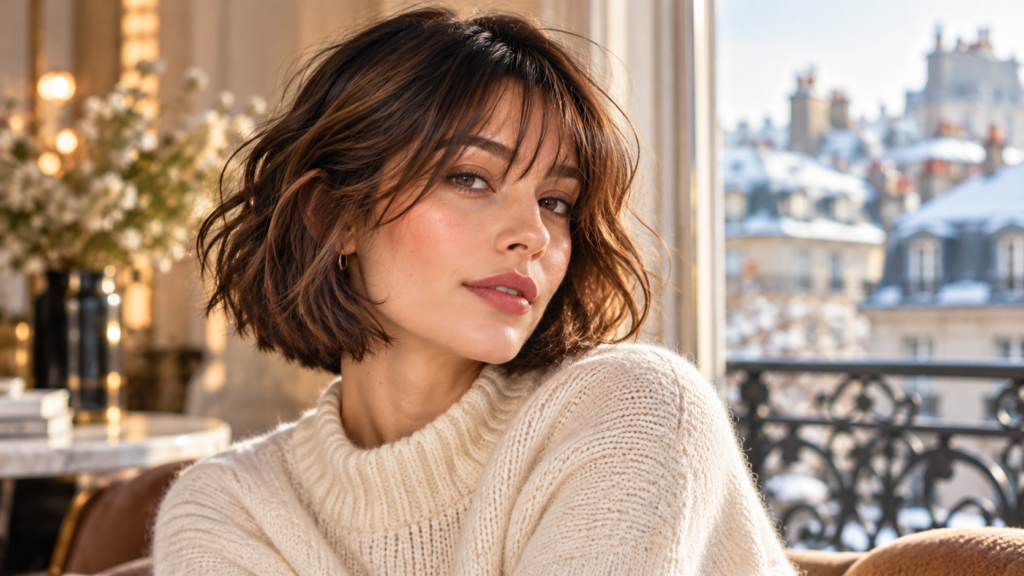
1. Classic chin-length French bob
This version sits around the chin with a relatively strong bottom edge.
The wispy bangs soften the front without disrupting the haircut’s compact shape.
Best for: Someone who wants a recognizable French bob that feels elegant but not overly formal.
2. Textured French bob with airy bangs
Softly textured ends create movement through the lower half of the haircut.
The fringe is separated into delicate pieces rather than styled as one continuous line.
Best for: Naturally wavy hair or anyone who prefers a relaxed finish.
3. Short French bob with eyebrow-grazing bangs
A shorter bob creates a more dramatic silhouette, especially when paired with fringe that sits close to the eyebrows.
It can highlight the cheekbones and make accessories such as earrings more visible.
Best for: People comfortable with a noticeably short haircut and regular shaping appointments.
4. Wavy French bob with soft fringe
Natural waves bring movement to the cut without requiring perfectly uniform curls.
A lightweight mousse or suitable styling cream can help define the wave pattern.
Best for: Hair that already forms loose bends or waves.
5. Sleek French bob with delicate bangs
A smoother finish makes the haircut look more precise and architectural.
The fringe remains light, providing contrast against the cleaner shape of the bob.
Best for: Straight hair or anyone who enjoys a polished look.
6. Curly French bob with wispy curly bangs
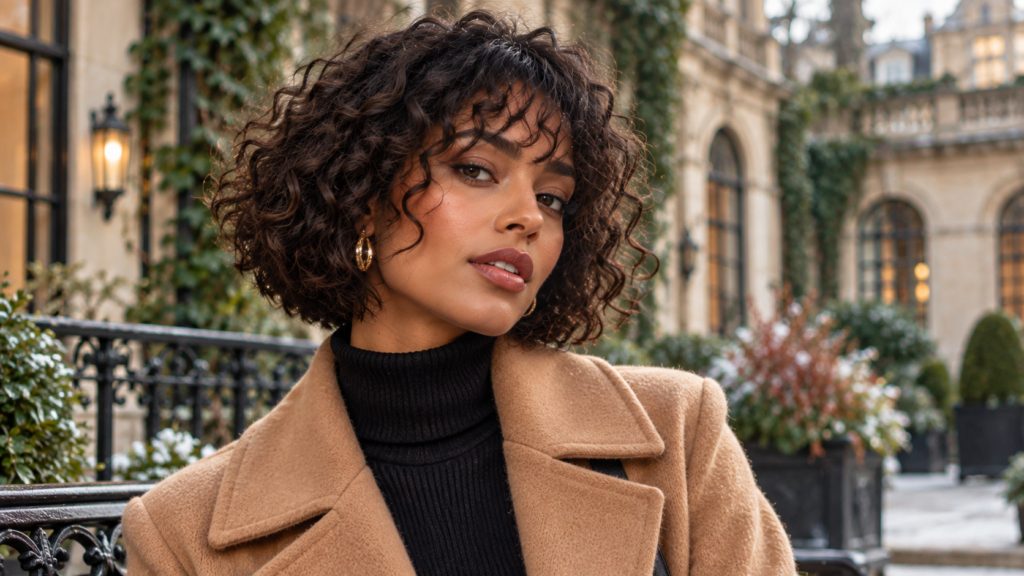
Instead of forcing the fringe straight, this variation allows individual curls to frame the forehead.
The overall silhouette can be rounded, softly layered, or slightly asymmetrical.
Best for: Curly hair when cut by someone familiar with its shrinkage and density.
7. Slightly grown-out French bob
A bob that extends a little below the chin can offer a gentler introduction to short hair.
Longer wispy bangs can blend into the side sections, making the transition easier as the cut grows.
Best for: First-time bob wearers or people who want more flexibility between salon appointments.
What to Ask Your Hairstylist Before Getting the Cut
One of the easiest ways to avoid haircut disappointment is to arrive with a clear description of what you want.
The words “French bob” can mean different things to different stylists.
Instead of relying on the name alone, discuss the actual shape.
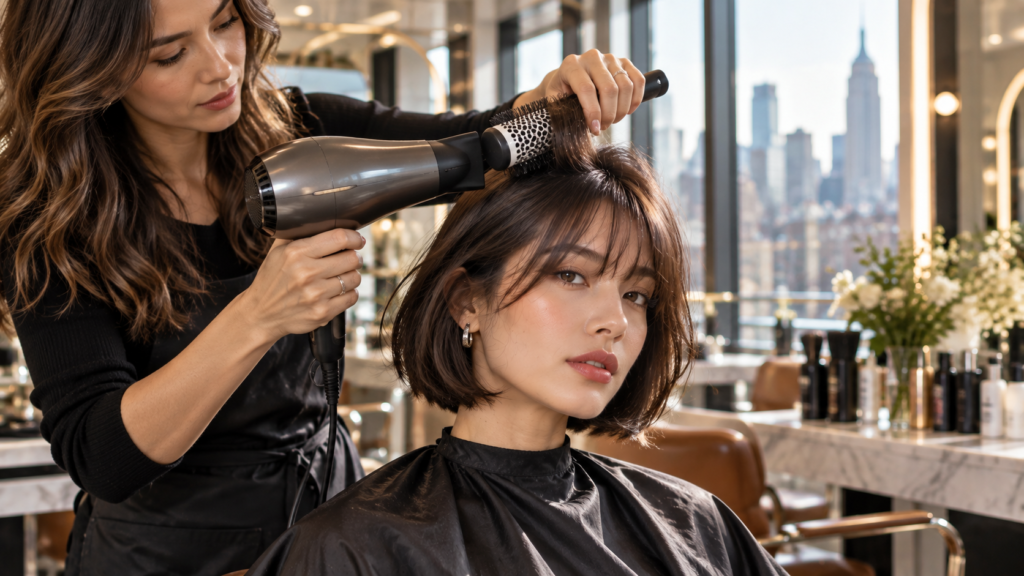
Step 1: Decide where the bob should end
Do you want it at the cheekbones, jawline, chin, or slightly below?
Even a small difference can change the overall appearance.
Show your stylist a photograph with the exact length you prefer.
Step 2: Explain how light you want the bangs
Wispy bangs can range from a few delicate strands to a relatively full fringe with textured ends.
Ask for a soft, separated fringe if you want your forehead to remain partially visible.
Step 3: Discuss your natural texture
Tell your stylist how your hair behaves after washing.
Does it dry straight, form waves, shrink into curls, or become frizzy in humidity?
This information is more useful than showing only photographs of heavily styled hair.
Step 4: Be realistic about styling time
If you have five minutes in the morning, say so.
A haircut that looks beautiful after professional blow-drying may require more work at home.
Ask your stylist to demonstrate a routine you can realistically repeat.
Step 5: Confirm the maintenance plan
Before the first cut, discuss how often you may need a fringe trim and how the bob will grow out.
This is especially important if you are transitioning from long hair.
A useful salon request
“I’d like a chin-length French bob with a softly defined shape and lightweight, wispy bangs. I want some natural movement, but I don’t want the ends to look too thin. Please adjust the length and fringe to suit my hair texture, and show me how to style it at home.”
Save two or three reference photographs showing similar hair texture to yours. Include one photo of a finish you do not want, because that can clarify your preferences just as effectively.
How to Style a French Bob With Wispy Bangs at Home
You do not need a complicated collection of styling tools to wear this haircut.
The ideal routine depends on whether you want a natural, textured finish or a smoother result.
Step 1: Start with clean, conditioned hair
Use shampoo suited to your scalp and hair type.
Apply conditioner according to your hair’s needs, concentrating on the lengths and ends if your hair is fine or straight.
Avoid applying heavy products directly to wispy bangs unless they are specifically needed for your texture.
Step 2: Remove excess moisture gently
Use a soft towel or cotton T-shirt to absorb water.
Avoid vigorous rubbing, which can contribute to tangling and frizz.
Step 3: Apply a small amount of styling product
For fine hair, consider a lightweight volumizing mousse.
For wavy hair, a small amount of curl-enhancing product may help encourage definition.
For dry or textured hair, use a conditioning product suited to your needs.
Start with less product than you think you need. You can always add more.
Step 4: Style the bangs first
Bangs often dry more quickly than the rest of the hair.
If you want a smooth fringe, gently direct the roots while blow-drying on low or medium heat.
Use your fingers or a small brush to separate the strands naturally.
Avoid excessive tension if you want the fringe to remain soft rather than stiff.
Step 5: Shape the bob
For a natural finish, allow the hair to air-dry when practical or use a diffuser suited to your texture.
For a sleeker look, direct the hair gently with a brush while blow-drying.
A small bend at the ends can add movement without creating a fully curled hairstyle.
Step 6: Finish without overloading the hair
Use a tiny amount of lightweight styling product if needed to define the ends.
Avoid spraying the fringe heavily or coating it in oil, which may make wispy bangs appear flat or separated into greasy sections.
The American Academy of Dermatology recommends limiting excessive heat, using appropriate heat protection, and choosing lower or medium heat settings to reduce damage.
Winter Hair Care Tips for a French Bob
Winter styling brings its own practical challenges.
Cold outdoor air, indoor heating, hats, and scarves can all affect how your hair looks and feels.
Keep moisture balanced
Dry indoor conditions may contribute to discomfort and dryness, especially if your hair or scalp is already prone to it.
Use conditioner consistently and consider a lightweight leave-in product if your hair needs additional moisture.
The goal is to condition the hair without weighing down the fringe.
Reduce friction from scarves and coats
Short bob ends can rub against high collars and scarves.
If you notice tangling, try smoother fabrics where possible and gently detangle the ends.
Avoid repeatedly brushing aggressively through knots.
Refresh bangs separately
You do not always need to wash your entire hairstyle when your bangs lose their shape.
Depending on your scalp and hair type, lightly dampening and restyling the fringe may be enough.
If the fringe is oily, cleanse it appropriately rather than relying on large amounts of dry shampoo.
Protect hair from excessive heat
Frequent blow-drying and hot tools can damage hair over time.
Use suitable heat protection, moderate temperatures, and the least amount of heat needed to achieve your preferred style.
Adjust your routine to your actual climate
Winter conditions vary significantly between London, Toronto, New York, Sydney, and other cities.
A cold, dry winter may require different care from a mild, humid season.
For readers in Australia, October is spring rather than winter. The haircut itself is wearable year-round; the winter-care recommendations are most relevant during colder months.
How Often Does a French Bob Need Trimming?
A short bob usually requires more attention to its outline than a longer haircut.
As the hair grows, the perimeter moves away from the original position, changing the silhouette.
A practical starting point is to discuss a bob-shaping appointment approximately every six to eight weeks, although the right schedule depends on growth, cut precision, and personal preference.
Bangs may need attention sooner, particularly if you prefer them above the eyebrows.
These intervals are general planning suggestions, not universal requirements.
If you prefer a softer, grown-out style, you may be comfortable waiting longer.
Avoid trimming very short bangs impulsively at home, particularly if your hair is curly or shrinks noticeably when dry.
Common French Bob Mistakes to Avoid
Even a beautiful reference photograph cannot guarantee the same result on every head of hair.
Here are several issues worth considering before your appointment.
Choosing the length without considering shrinkage: Wavy and curly hair may sit higher once dry. Ask your stylist to evaluate the finished length.
Making fine hair too heavily layered: Removing too much weight can leave the perimeter looking sparse.
Requesting bangs that are too dense: If your goal is a wispy fringe, a heavy section of hair may create a completely different appearance.
Ignoring your natural parting or growth patterns: Cowlicks and hairline direction can affect how bangs sit.
Assuming the haircut requires no styling: Some people can air-dry a French bob beautifully, while others need a few minutes to shape the fringe.
Using too much product: Heavy creams and oils may flatten fine hair and make lightweight bangs look greasy.
Choosing a style only because it is fashionable: The best haircut is one that works with your preferences, routine, and hair characteristics.
Is the French Bob With Wispy Bangs Worth Trying?
If you are looking for a short haircut that feels stylish without appearing overly formal, this combination deserves consideration.
It can work especially well if you like face-framing details, natural movement, and a silhouette that pairs easily with everyday clothing.
However, it may be less convenient if you dislike hair touching your forehead, prefer tying all your hair back, or want to avoid frequent fringe adjustments.
For someone hesitant about going very short, a chin-length or slightly longer version with extended wispy bangs may be a sensible starting point.
You can always discuss a shorter version at a later appointment.
Frequently Asked Questions
What is a French bob with wispy bangs?
It is a short bob, generally around the cheekbones or chin, paired with a lightweight, softly separated fringe. The look combines a defined haircut shape with natural movement around the face
Is the French bob with wispy bangs trendy in 2026?
French bobs and wispy bangs have both featured in 2026 beauty coverage. The combination is a contemporary styling option, although there is no verified evidence here that it is the year’s most popular haircut.
Does a French bob suit a round face?
Yes. A stylist can adapt the length and fringe to complement a round face. A slightly longer bob and an open fringe are options for people who prefer a more elongated visual effect.
Can fine hair look good with a French bob?
Yes. A defined perimeter can help fine hair appear fuller. Excessive thinning or layering may reduce that effect, so the cut should be tailored to hair density.
Are wispy bangs high-maintenance?
They can require regular adjustments, particularly if they become oily or lose their shape overnight. However, some people find them easier to grow out than a heavy, straight-across fringe.
Can curly hair have a French bob with wispy bangs?
Absolutely. The stylist should consider curl pattern, shrinkage, density, and the desired dry shape. Curly bangs may look different from straight, airy bangs but can create an equally attractive result.
How do you style wispy bangs without heat?
Depending on your hair texture, lightly dampen the fringe, arrange it with your fingers, and let it dry naturally. A small amount of lightweight styling product may help, but some growth patterns require additional shaping.
What is the difference between a French bob and an Italian bob?
A French bob is usually shorter and more compact, often with bangs. An Italian bob generally has a fuller, bouncier silhouette and may be slightly longer. These descriptions vary between stylists.
How often should you trim a French bob?
Many people plan a shape-maintenance appointment around every six to eight weeks, but the ideal schedule depends on how the cut grows and how precise you want the outline to remain. Bangs may need attention sooner.
Is a French bob suitable for winter?
Yes. Its short shape can complement winter coats, scarves, and high-neck clothing. You may need to adjust your styling routine for dryness, static, or friction from hats and collars.
Final Thoughts
The French bob with wispy bangs succeeds because it balances structure and softness.
The bob gives the hairstyle a recognizable shape, while the airy fringe keeps it from feeling too severe. With the right length and cutting technique, it can be adapted to a wide range of hair textures and personal styles.
For winter 2026, it is a versatile option worth considering, whether you prefer a sleek, polished finish or a more relaxed, textured look.
Before making the cut, focus on three things: your natural hair texture, the length you feel comfortable wearing, and the amount of styling you want to do each day.
A haircut chosen around those details is more likely to remain enjoyable long after the first salon appointment.